Blog
Specialty Herbal Powders in Pakistan: Forms, Uses and Buying Guide

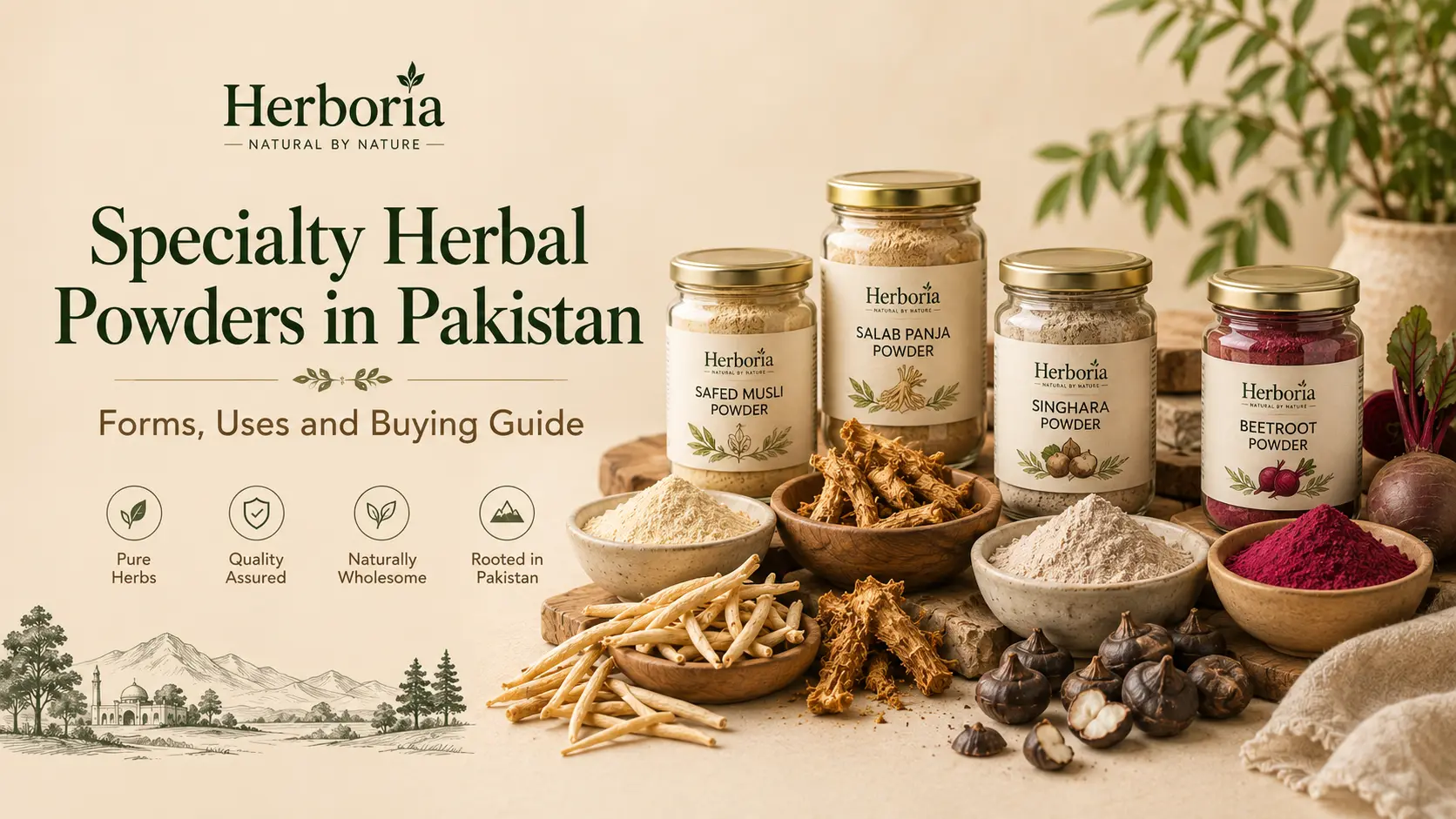
Specialty herbal powders in Pakistan are dried plant, root, fruit or food ingredients sold in powdered form for traditional household, culinary or personal-care use. The important buying questions are not whether a powder has a dramatic “natural” claim, but what ingredient it contains, how clearly it is identified, how it should be used, and how it should be stored.
Pakistan’s pansar market includes familiar powders as well as more specialised roots and ingredients. This guide explains common forms, Urdu/local names, practical uses, quality checks and precautions without treating traditional ingredients as medicines or promising outcomes that the product label does not support.
What Are Specialty Herbal Powders?
“Specialty herbal powders” is a useful shopping term for powders that sit beyond everyday masalas. They may be made from dried roots, fruits, seeds, leaves or vegetables and may be bought from a pansar store, herbal shop or online natural-products seller.
The category is broad, so one powder should never be treated as interchangeable with another. A food powder such as Singhara Powder has a different role from a traditional root such as Salab Panja. The ingredient identity and intended use should drive your decision.
Common Specialty Powders and Traditional Roots in Pakistan
Indian Safed Musli Powder — سفید موصلی
Indian Safed Musli Powder is prepared from dried white musli root and sold as a fine single-herb powder. In traditional herbal markets it is recognised as a root ingredient rather than a general cooking spice. When buying it, look for a clearly stated ingredient, a consistent root-powder appearance and packaging that protects it from moisture.
Salab Panja — ثعلب پنجہ
Salab Panja is a traditional pansar root/tuber ingredient. Because names and spellings can vary between sellers, the product page should clearly identify what is being sold rather than relying on a vague “herbal powder” label. Avoid assuming that a traditional reputation is the same thing as proven medical effectiveness.
Singhara Powder — سنگھاڑا پاؤڈر
Singhara Powder, also sold as water chestnut flour, is different from many medicinally marketed herbs because it is primarily a food ingredient. It can be used in cooking, baking, porridge, pancakes and recipes where a mild flour-like powder is useful. This is a good example of why the word “herbal” alone tells you very little about how a powder should be used.
Beetroot Powder — چقندر پاؤڈر
Beetroot Powder is a dried vegetable powder with a naturally strong red-purple colour. It may be used in smoothies, drinks, recipes or as a natural food-colour ingredient. Colour intensity can vary between batches and should not be used as a stand-alone purity test.
Whole Root, Cut Herb or Powder: Which Form Should You Choose?
| Form | Useful when | Main buying check |
|---|---|---|
| Whole root or whole herb | You want to inspect the raw ingredient and prepare it yourself | Identity, cleanliness, dryness and visible contamination |
| Cut or crushed ingredient | You want easier preparation while still seeing much of the original material | Uniformity, aroma, foreign matter and packaging |
| Fine powder | You want convenient mixing or recipe use | Ingredient declaration, texture, colour consistency and moisture protection |
Powder is convenient, but it also makes visual identification harder. That is why a trustworthy product listing should compensate with clearer naming, ingredient information and handling guidance.
English, Urdu and Local Names Matter
Pakistan’s pansar trade uses English, Urdu and regional names side by side. The same item may appear under multiple spellings. For example, Singhara may be written as سنگھاڑا, while Salab Panja may appear as ثعلب پنجہ. A useful listing should connect the local name with the commercial product name so shoppers do not accidentally buy the wrong ingredient.
When two products have similar local names, ask the seller for the exact product identity instead of relying on a photo alone.
How Specialty Powders Are Commonly Used
Uses vary by ingredient. Some powders are primarily foods; some are used in traditional household preparations; others are used externally in hair or skin routines. The safest way to describe use is ingredient by ingredient rather than making one blanket claim for every “herbal powder.”
- Food powders: may be mixed into recipes, drinks or baking according to the product label.
- Traditional roots and pansar ingredients: may have long-standing cultural uses, but traditional use should be distinguished from clinical evidence.
- External-care powders: should be used according to product directions, with extra care for sensitive skin.
How to Check Quality Before Buying
1. Look for a specific ingredient name
A product labelled only “herbal powder” is not enough. Prefer a listing that states the actual ingredient and, where useful, its common/local name.
2. Read the ingredient list
For a single-ingredient powder, the ingredient statement should be straightforward. If flavours, sweeteners, colours or other ingredients are added, they should be disclosed rather than hidden behind “natural” language.
3. Check the form and intended use
Do not assume that every powder is meant to be swallowed, brewed or applied to skin. The intended use should be clear from the label or product information.
4. Inspect packaging
A dry powder should be protected from moisture, dust and repeated open exposure. Resealable pouches or properly closed containers are useful when they are kept clean and dry.
5. Be cautious with exaggerated claims
Claims such as “guaranteed cure,” “works for everyone,” or promises to treat a disease should make you more cautious, not more confident. Herboria’s content policy separates traditional use from scientific evidence and does not present these powders as cures.
Storage in Pakistan’s Climate
Heat and humidity can affect dry powders. Unless a product label says otherwise, keep the pack tightly closed in a cool, dry place away from direct sunlight and steam. Use a clean, dry spoon and do not allow water to enter the pouch or container.
If the powder develops unexpected moisture, mould, insects, a clearly abnormal odour or another sign of contamination, do not rely on drying it again at home.
Safety and Important Precautions
“Natural” does not mean risk-free. Different roots, herbs and powders can have different safety profiles. People who are pregnant or breastfeeding, children, people taking prescription medicines, or anyone managing a medical condition should be particularly cautious with products marketed for internal herbal use and should seek qualified professional advice where appropriate.
Do not substitute an herbal powder for prescribed treatment. For food powders, follow normal food-safety practices and the specific product label.
Where to Buy Specialty Herbal Powders in Pakistan
Herboria groups relevant products under Herbs & Pansar Items. For this cluster, useful product examples include Indian Safed Musli Powder, Salab Panja, Singhara Powder and Beetroot Powder.
Use the category page to compare labels and availability rather than choosing on the basis of a single benefit claim.
Quick Buying Checklist
- Is the exact ingredient clearly named?
- Is the local/Urdu name provided where useful?
- Does the product explain whether it is for food, traditional use or external care?
- Is the packaging dry, sealed and clearly labelled?
- Are storage instructions provided?
- Are the claims specific and realistic rather than medical promises?
Related Herboria Guides
This is the pillar article for Herboria’s Specialty Powders & Traditional Roots cluster. Supporting guides HB-032 through HB-040 will cover individual ingredients, comparisons, quality checks and storage questions. As those articles go live, they should link back to this guide and this page should be updated with contextual links to the relevant supporting article.
Frequently Asked Questions
What are specialty herbal powders in Pakistan?
They are powdered plant, root, fruit, seed or vegetable ingredients sold for culinary, traditional household or personal-care use. Because the category is broad, always check the exact ingredient and intended use.
How are specialty herbal powders commonly used?
It depends on the ingredient. Singhara and beetroot powders may be used in food, while traditional roots such as Safed Musli or Salab Panja should be treated according to their specific product guidance rather than as everyday spices.
How should herbal powders be stored?
Follow the label. As a general rule for dry powders, keep the package tightly closed, cool, dry and away from direct sunlight and moisture.
What precautions apply?
Do not assume a natural product is suitable for everyone. Avoid unsupported medical use, and seek qualified advice when pregnancy, breastfeeding, medicines or health conditions could make internal herbal use more complicated.
Where can I explore Herbs & Pansar Items in Pakistan?
Browse Herboria’s Herbs & Pansar Items category and compare clearly labelled products by ingredient, form and intended use.
Editorial Note
This guide is educational and shopping-focused. Traditional use is not presented as proof of medical effectiveness. Product-specific claims should match the current Herboria label and listing.