Blog
Herbs and Pansar Items in Pakistan: A Complete Beginner’s Guide

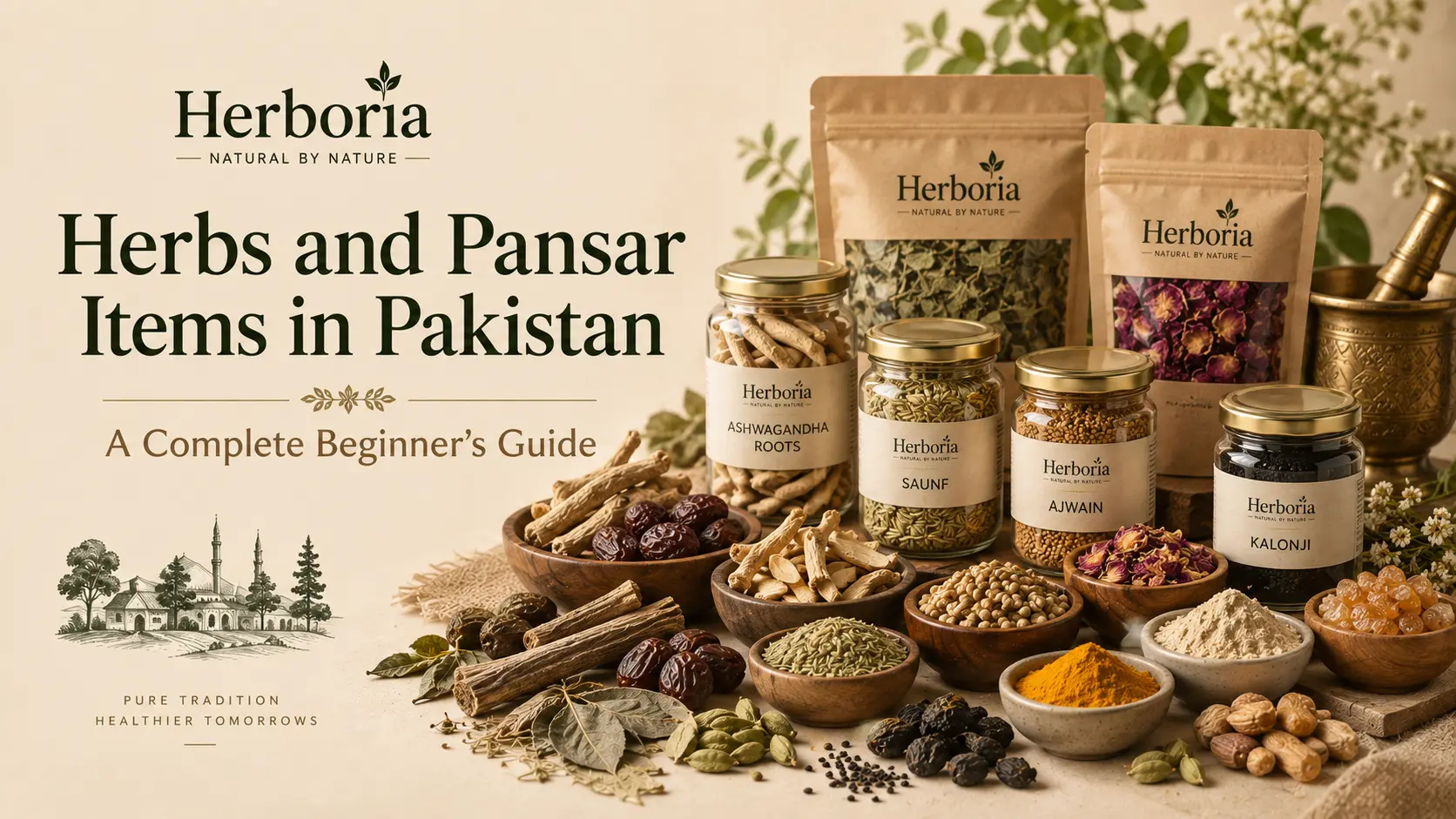
Herbs and pansar items in Pakistan include dried roots, leaves, seeds, fruits, powders and other traditional ingredients sold through pansar shops, herbal stores and online natural-product sellers. The safest way to buy them is to identify the exact ingredient, understand its intended use, check the label and packaging, and separate traditional use from medical claims.
This beginner’s guide explains common pansar categories, English and Urdu naming, whole-herb versus powder forms, quality checks, storage in Pakistan’s climate and the precautions that matter when buying traditional herbal ingredients online.
What Does “Pansar” Mean in Pakistan?
In everyday Pakistani usage, a pansar shop is a traditional herbal and natural-ingredient store. Depending on the shop, the range may include dried herbs, roots, spices, seeds, gums, powders, clays, dried fruits and other ingredients used in food, household routines and traditional preparations.
That broad mix is exactly why shoppers should not treat every pansar product as the same type of item. Some are ordinary foods, some are cosmetic ingredients, and some are herbs with traditional internal uses that require more caution.
Main Types of Herbs and Pansar Items
Dried roots and traditional herbs
Roots such as Asgand Nagori, Safed Musli and Salab Panja are traditional pansar ingredients. These should be clearly identified by name, form and intended use rather than sold under vague “herbal tonic” language.
Leaf and fruit powders
Examples include Amla Powder and Neem Leaf Powder. These may be bought for food, hair or skin routines depending on the ingredient and the specific product directions.
Food powders and flours
Some pansar items are primarily culinary ingredients. Singhara Powder, for example, is a water-chestnut flour used in cooking and baking. Calling it “herbal” does not change the fact that its main role is as a food ingredient.
Seeds, spices and pantry ingredients
Pansar stores often overlap with spice and pantry categories. Seeds, whole spices and dried ingredients may be used in cooking rather than in herbal preparations.
Clays and external-care ingredients
Products such as Multani Mitti are generally used externally rather than as food. The product page should make that intended use clear.
Common English and Urdu Names
| English/Common Name | Urdu/Local Name | Typical Form |
|---|---|---|
| Ashwagandha / Asgand Nagori | اسگند ناگوری | Whole root or powder |
| Amla | آملہ | Dried fruit or powder |
| Neem | نیم | Dried leaves or powder |
| Singhara | سنگھاڑا | Whole dried ingredient or flour/powder |
| Salab Panja | ثعلب پنجہ | Dried root/tuber or powder |
Names can vary by region and seller. A useful online listing connects the local name to the ingredient identity so customers do not need to guess from a photograph.
Whole Herbs vs Powders
Whole ingredients let buyers see more of the original plant material, while powders are convenient for mixing and portioning. Neither form is automatically “better.”
- Whole root/leaf: easier to visually inspect, but requires more preparation.
- Cut or crushed herb: a middle ground between whole form and fine powder.
- Powder: convenient, but harder to identify visually once ground.
Because powders are harder to verify by appearance, the label, ingredient declaration and seller transparency become more important. Herboria’s specialty herbal powders guide goes deeper into powdered roots and specialty ingredients.
How Pansar Items Are Commonly Used
Use depends entirely on the ingredient. Some are foods, some are used in traditional household preparations, and others are used externally. A responsible guide should not turn cultural use into a universal medical recommendation.
For example, the Amla and Neem Powders guide treats those two ingredients separately because their routines, handling and safety considerations differ.
How to Choose Good-Quality Pansar Items
Start with identity, not benefit claims
Ask: What exactly is this ingredient? The product name should be specific enough to distinguish a root, leaf, fruit, seed, flour or cosmetic ingredient.
Check the ingredient statement
Single-ingredient products should have a clear declaration. If the item is a blend, the seller should disclose the components rather than hiding them behind phrases such as “secret herbal mix.”
Look at the form and condition
Whole herbs should be reasonably clean and dry. Powders should not show obvious moisture, mould or insect contamination. Natural variation in colour is possible, so colour alone is not a reliable purity test.
Review packaging
Dry ingredients need protection from moisture and contamination. Resealable pouches or tightly closed containers can help when they are used properly.
Check intended use
A food product, cosmetic clay and traditional internal-use herb should not all carry the same directions. Clear purpose is a sign of better product information.
Storage in Pakistan’s Climate
Heat and humidity can reduce the quality of dry herbs and powders. Unless the label says otherwise, keep pansar products in a cool, dry place away from direct sunlight, steam and wet utensils.
- Close the pack after every use.
- Use a clean, dry spoon.
- Do not mix old and new batches in the same container unless you are sure both are in good condition.
- Discard products with visible mould, insects or unusual moisture.
Safety: Traditional Does Not Mean Risk-Free
Traditional herbs can contain biologically active compounds. Internal use may not be suitable for everyone, particularly during pregnancy or breastfeeding, for children, for people with chronic conditions, or for people taking prescription medicines.
Do not use a pansar product as a substitute for prescribed treatment. When a product is marketed for a health condition, look for evidence and qualified medical guidance rather than relying only on testimonials.
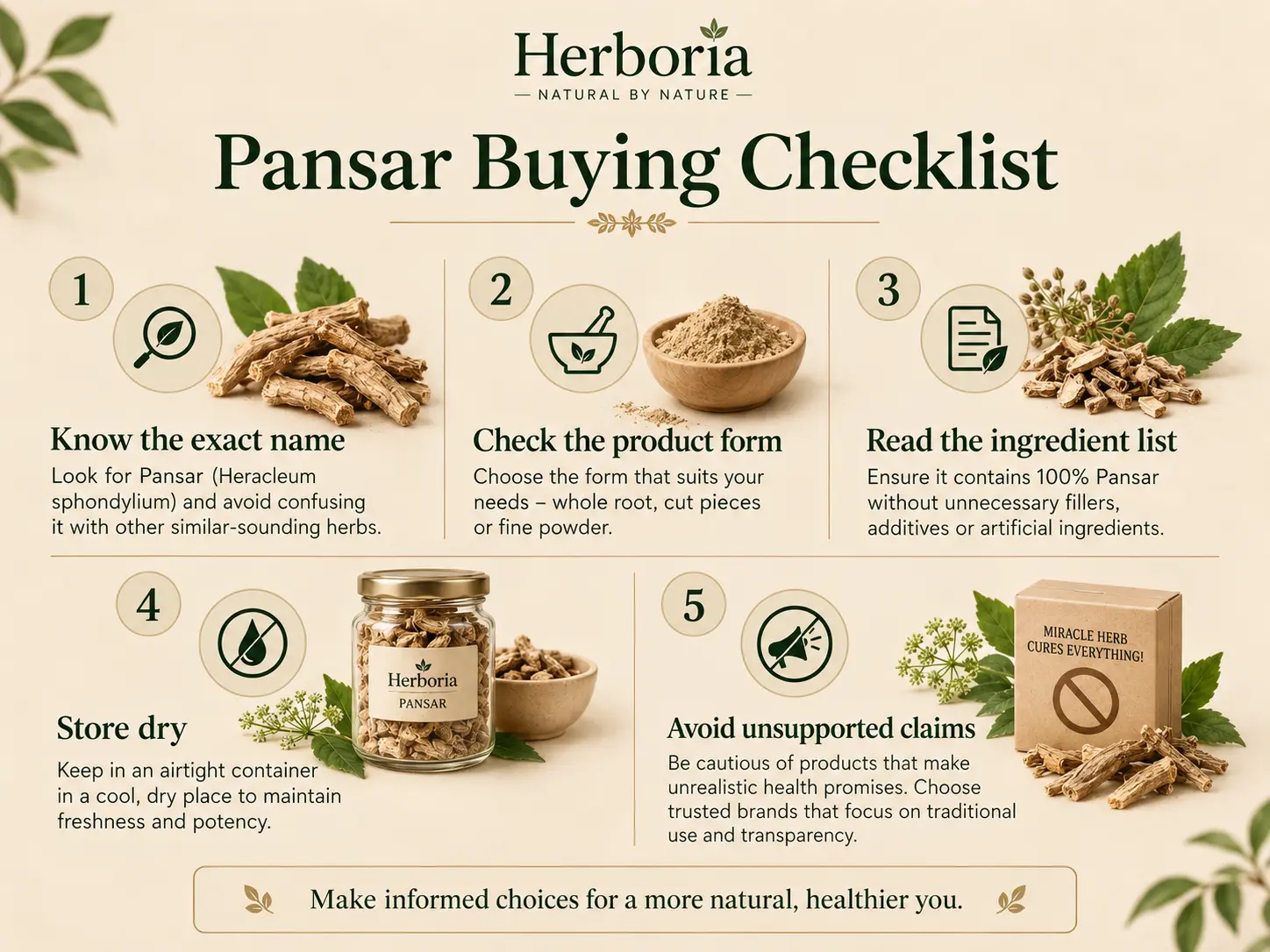
Buying Herbs and Pansar Items Online in Pakistan
Online buying removes the ability to inspect a shop shelf in person, so the product page has to do more work. Look for:
- clear English and Urdu/local names;
- ingredient and product form;
- pack size;
- storage guidance;
- real product photographs or consistent catalogue images;
- seller contact information; and
- delivery/payment information.
For broader online-shopping checks, see Herboria’s Natural Products Online: Quality and Trust Guide.
Where to Explore Herbs & Pansar Items
Browse Herboria’s Herbs & Pansar Items category. Relevant examples include Amla Powder, Neem Leaf Powder, Asgand Nagori, Safed Musli and Salab Panja.
Quick Beginner’s Checklist
- Know the exact ingredient name.
- Match the Urdu/local name where useful.
- Check whether it is a food, cosmetic ingredient or traditional herb.
- Prefer clear single-ingredient or fully disclosed blends.
- Store dry items away from moisture.
- Do not rely on “100% natural” as proof of quality or safety.
- Be cautious with disease-treatment claims.
Related Herbs & Pansar Guides
This is the pillar article for Herboria’s Herbs & Pansar Foundations cluster. Supporting articles HB-002 through HB-010 will cover authentic online buying, pansar vs herbal stores, names, label reading, whole herbs vs powders, storage, freshness, Unani herbs and safety. Each support article should link back to this pillar and to one or two relevant siblings when live.
Frequently Asked Questions
What are herbs and pansar items in Pakistan?
They are traditional and natural ingredients sold through pansar shops and herbal stores, including roots, leaves, seeds, powders, clays, food ingredients and other household items.
How are pansar items commonly used?
Use depends on the ingredient. Some are foods, some are used externally, and some have traditional herbal uses. Always check the specific product directions.
How should pansar items be stored?
Follow the label. Dry herbs and powders are generally kept tightly closed, cool, dry and protected from direct sunlight and moisture.
What precautions apply?
Do not assume all natural herbs are safe for every person. Internal-use herbs can interact with medicines or be unsuitable in pregnancy, breastfeeding or certain health conditions.
Where can I explore Herbs & Pansar Items in Pakistan?
Visit Herboria’s Herbs & Pansar Items category to compare available products by ingredient, form and intended use.
Editorial Note
This guide is educational. Traditional use is described as cultural/product context, not as proof that an ingredient diagnoses, treats, cures or prevents disease.