Blog
Amla and Neem Powders: Uses, Differences and Safe Handling

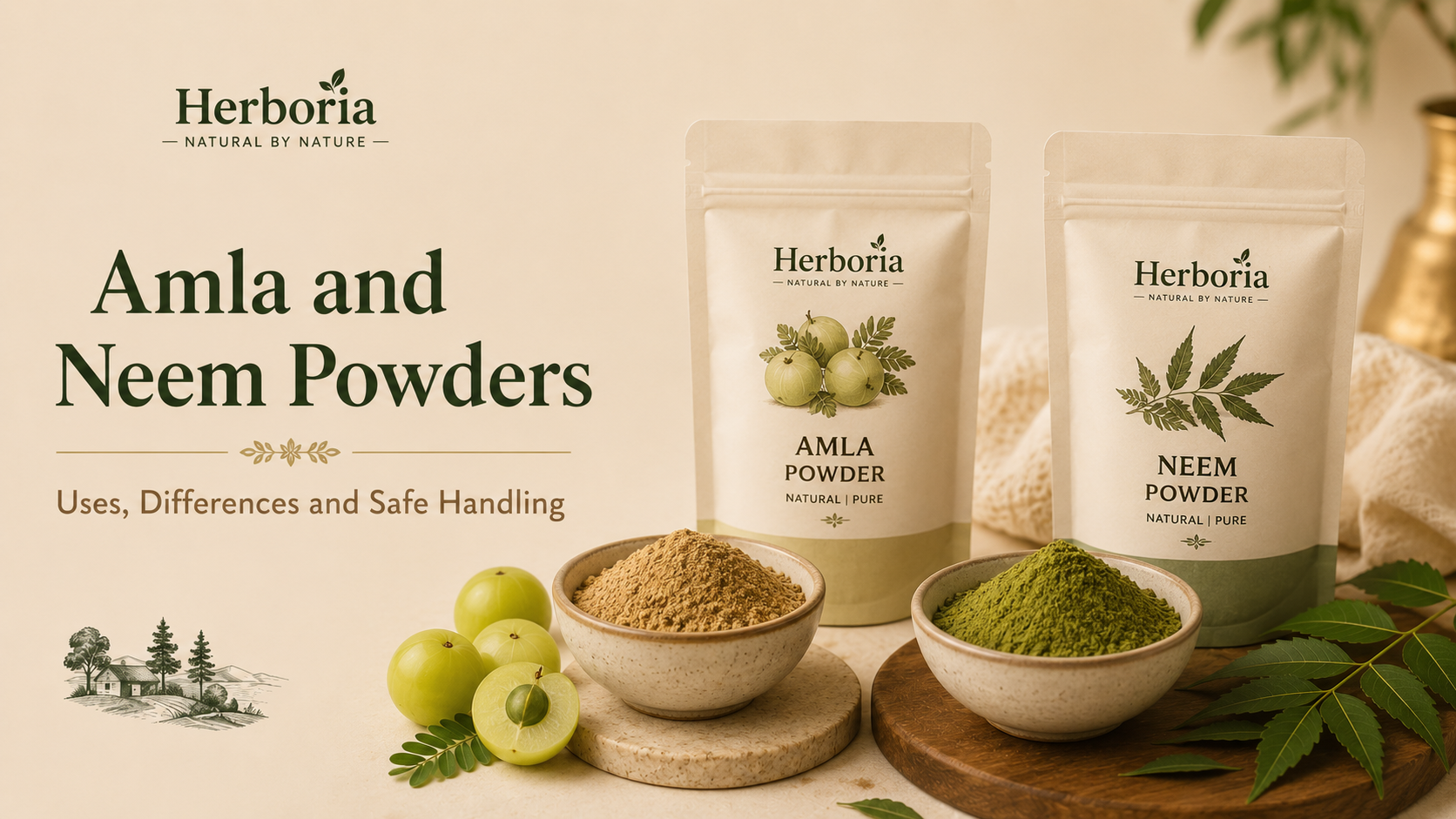
Amla powder and neem leaf powder are different herbal materials with different source plants, aromas, colours and common traditional uses. Amla powder is made from Indian gooseberry (آملہ), while neem powder is made from dried neem leaves (نیم). They should not be treated as interchangeable, and the intended use on the product label should always guide how each powder is handled.
In Pakistan, both products are familiar in traditional household routines, particularly hair and skin-care preparations. Amla also appears in food products such as Amla Murabba. This guide focuses on practical, non-medical uses, quality checks, storage and safe handling rather than cure or treatment claims.
Explore: Amla Powder | Neem Leaf Powder | Amla Murabba
What Are Amla and Neem Powders?
Amla powder is produced by drying and grinding Indian gooseberry material into a fine powder. In Urdu, amla is written as آملہ. Depending on the product specification, amla powder may be positioned for traditional hair-care, skin-care or food-related use, so buyers should check the exact label rather than assuming every amla powder has the same intended application.
Neem leaf powder is produced from dried neem leaves. Neem is written as نیم in Urdu. Herboria’s current Neem Leaf Powder listing is positioned for traditional skin, scalp and hair-care routines, including homemade masks. That intended use is different from automatically treating neem powder as an edible supplement.
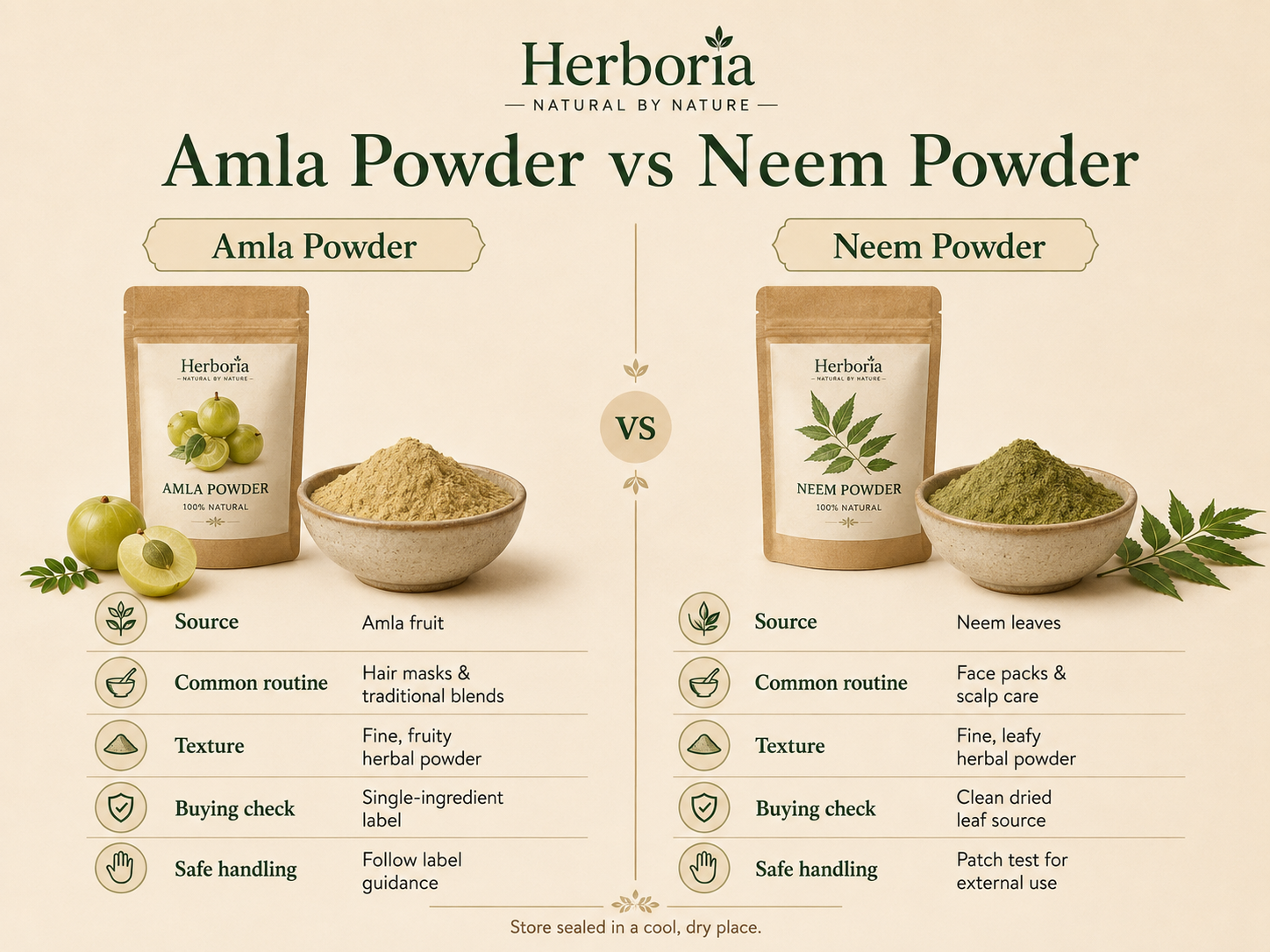
Amla Powder vs Neem Powder: Main Differences
| Factor | Amla Powder | Neem Leaf Powder |
|---|---|---|
| Source | Indian gooseberry / amla | Neem leaves |
| Urdu name | آملہ پاؤڈر | نیم پاؤڈر |
| Typical appearance | Brownish, tan or green-brown depending on batch | Usually green to olive-green |
| Aroma | Earthy, fruit-herbal | Distinctly earthy and bitter-herbal |
| Common Herboria positioning | Traditional household/hair-care uses depending on product label | Traditional skin, scalp and hair-care routines |
| Key rule | Follow the exact product label | Do not assume cosmetic neem powder is intended for oral use |
Common Traditional Uses of Amla Powder
Amla has a long history in South Asian household routines. For cosmetic or hair-care use, amla powder is commonly mixed with water or another suitable base to make a paste for the hair or scalp. Some users combine it with other traditional powders, but any mixture should be patch-tested where appropriate and kept away from the eyes.
Amla also exists in edible preparations, including preserves such as Amla Murabba. That does not mean every amla powder sold online is automatically food-grade. The label, ingredients and intended-use statement are what matter.
Common Traditional Uses of Neem Leaf Powder
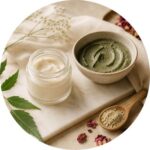
Neem leaf powder is commonly used in homemade face, scalp and hair masks. Herboria’s current product information describes it as a fine powder made from dried neem leaves for traditional skin, scalp and hair-care routines.
A simple household cosmetic preparation may involve mixing a small amount of powder with a suitable liquid until it forms a workable paste, then using it according to the product directions. Avoid turning a cosmetic routine into a medical claim: a neem mask is not a substitute for treatment of acne, infection, eczema, hair loss or another diagnosed condition.
Can Amla and Neem Powder Be Mixed Together?
They can appear together in traditional cosmetic routines, especially hair masks, but compatibility depends on the specific products and the user’s skin or scalp. Mixing two natural ingredients does not guarantee that the combination will suit everyone.
If you are trying a new topical mixture, use clean tools, prepare only what you need, avoid the eye area and stop use if you experience significant irritation. People with sensitive skin, allergies or an active skin condition should get appropriate professional guidance before experimenting with multiple herbal ingredients.
How to Choose Amla or Neem Powder Online
Check the plant and part used
The product name should tell you whether the powder comes from amla fruit material, neem leaves or another plant part. Botanical or common names can help reduce confusion where several local names exist.
Check the intended use
This is especially important with herbal powders. A powder intended for topical hair or skin use should not automatically be consumed. If a product is sold for food use, that should be clearly supported by its label and specifications.
Check the ingredient list
A single-herb powder should have a straightforward declaration. If other ingredients are added, they should be identified rather than hidden behind general marketing terms.
Check colour and aroma realistically
Natural agricultural materials can vary. A slightly different shade between batches is not automatically a sign of poor quality. Extreme odour changes, visible mould, insects, unusual moisture or damaged packaging are more meaningful warning signs.
Check packaging
Powders should be protected from moisture and contamination. A resealable pouch or tightly closed container is useful after opening, especially in Pakistan’s humid periods.
How to Store Herbal Powders in Pakistan’s Climate
- Keep the pouch or container tightly closed after each use.
- Store in a cool, dry place away from direct sunlight and steam.
- Use a clean, dry spoon to prevent moisture entering the powder.
- Do not store the product beside a stove, sink or humid bathroom area unless the label specifically allows it.
- Follow the best-before date and product-specific instructions.
Powders can absorb moisture from the air. Clumping does not always prove spoilage, but obvious dampness, mould, insects or an abnormal smell are reasons to stop using the product.
Safe Handling and Precautions
“Natural” does not mean irritation-free or suitable for every person. Before applying a new herbal powder widely to the face or scalp, a cautious patch test may help identify obvious sensitivity. Avoid broken skin unless the product directions specifically support that use.
Pregnancy, breastfeeding, children, chronic skin conditions, known allergies and concurrent medicines can change what is appropriate. This article does not recommend oral neem or medical dosing. For any therapeutic or ingestion question, use the product label and seek guidance from a qualified healthcare professional where necessary.
Quality Claims to Treat Carefully
Marketing phrases such as “chemical-free,” “detox,” “cures dandruff,” “treats acne” or “guaranteed hair growth” can overstate what a simple herbal powder can prove. A trustworthy listing should focus on verifiable information: plant source, form, ingredients, pack size, intended use, storage and precautions.
Traditional use can be described as traditional use. It should not automatically be presented as strong clinical evidence for treating a disease or condition.
Where to Buy Amla and Neem Products in Pakistan
For a direct comparison, review Herboria’s Amla Powder and Neem Leaf Powder listings. If you are specifically looking for an edible amla preserve rather than powder, see Amla Murabba.
When buying online, check current pack sizes, intended use, ingredient information, shipping and payment details on the latest product page.
Related Amla & Neem Guides
This is the pillar article for the Amla & Neem topical cluster. Planned supporting articles HB-022, HB-023 and HB-024 will cover narrower questions and will link back to this guide. Their links will be inserted once the posts are published so the site does not intentionally create broken internal links.
Frequently Asked Questions
What are common amla and neem powder uses?
Amla and neem powders are commonly used in traditional household hair, scalp and skin-care preparations. Their uses differ, and the exact product label should determine whether a powder is intended for topical or food use.
Can amla and neem powder be used the same way?
No. They come from different plants and are not interchangeable. Check the intended use and directions for each specific product.
How should amla and neem powders be stored?
Keep them tightly sealed in a cool, dry place away from humidity, direct sunlight and steam. Always use clean, dry utensils.
What precautions apply?
Avoid assuming that a topical powder is edible. Stop topical use if significant irritation occurs, and seek professional guidance for medical, pregnancy, allergy or medicine-related questions.
Where can I explore Amla and Neem products in Pakistan?
Start with Herboria’s Amla Powder and Neem Leaf Powder product pages for current details.
Editorial Note
This guide separates traditional household use from medical evidence. It does not diagnose, treat or cure any condition and does not provide medicinal dosage instructions.