Blog
Dry Fruits and Nuts in Pakistan: Types, Uses and Buying Guide

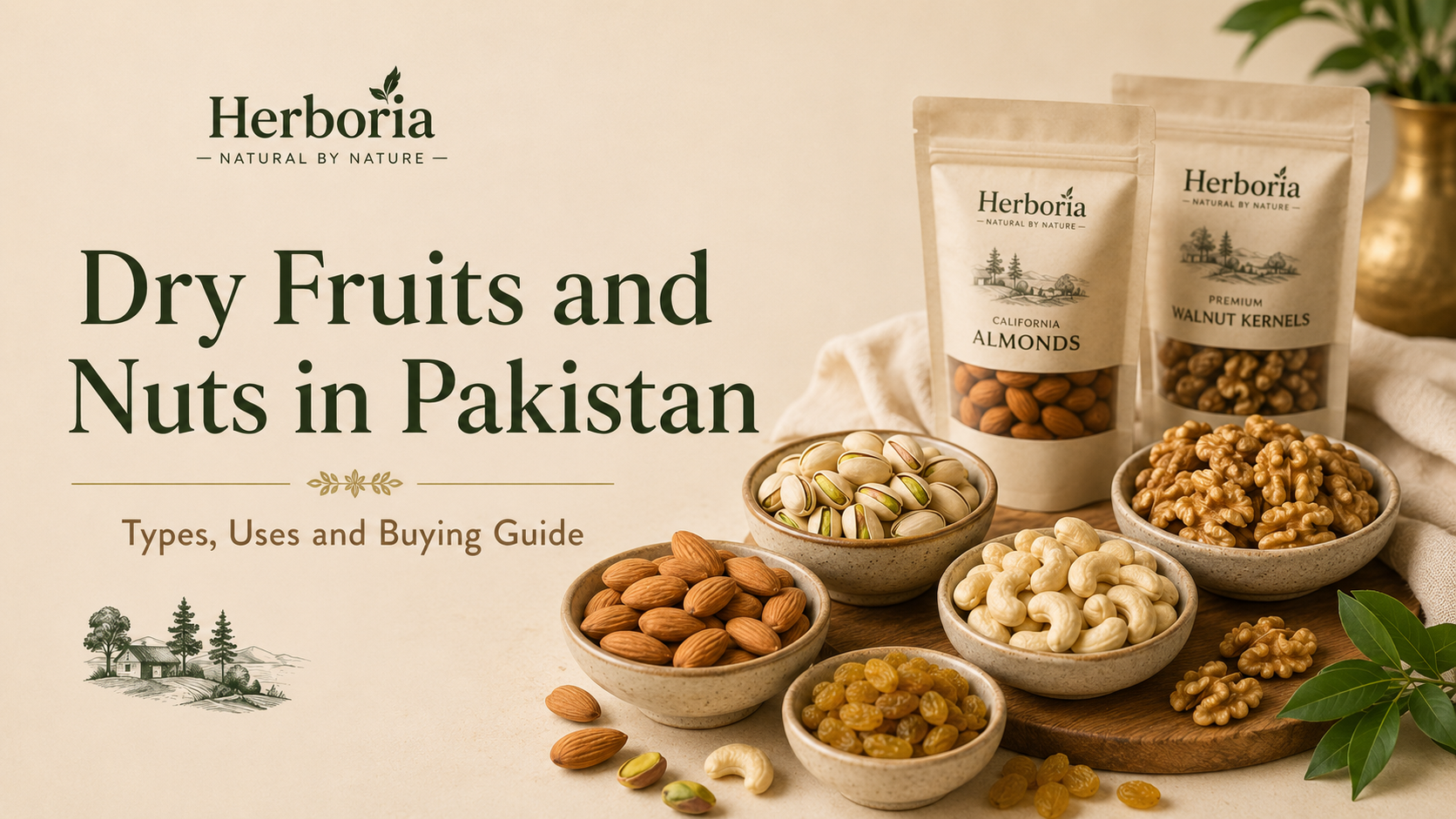
Dry fruits and nuts are widely used in Pakistan for snacking, desserts, breakfast, gifting and seasonal winter eating. Common choices include almonds, pistachios, walnuts, raisins and dates. Their useful nutritional qualities depend on the individual food, serving size and overall diet, so “dry fruits benefits Pakistan” should be understood as a broad topic rather than a promise that every dry fruit has the same effect.
For online buyers, freshness, variety, origin, shell condition, roasting or salting, packaging and storage matter more than exaggerated wellness claims. This guide explains common types, practical uses, quality checks and how to buy dry fruits and nuts in Pakistan with more confidence.
Explore: Herboria Dry Fruits & Nuts | Premium American Almonds | Export Quality American Almonds | Premium Pistachios
What Are Dry Fruits and Nuts?
The term “dry fruits” is used broadly in Pakistan. Technically, dried fruits such as raisins and dates differ from tree nuts such as almonds, pistachios and walnuts, but retail stores and households often group them together as dry fruits or خشک میوہ جات.
Dried fruits are fruits with much of their water removed naturally or through drying. Nuts are seeds or kernels with a naturally different nutrient profile and texture. Because these foods differ, it is better to discuss specific products rather than make one universal health claim about the entire category.
Common Dry Fruits and Nuts in Pakistan
Almonds — Badam
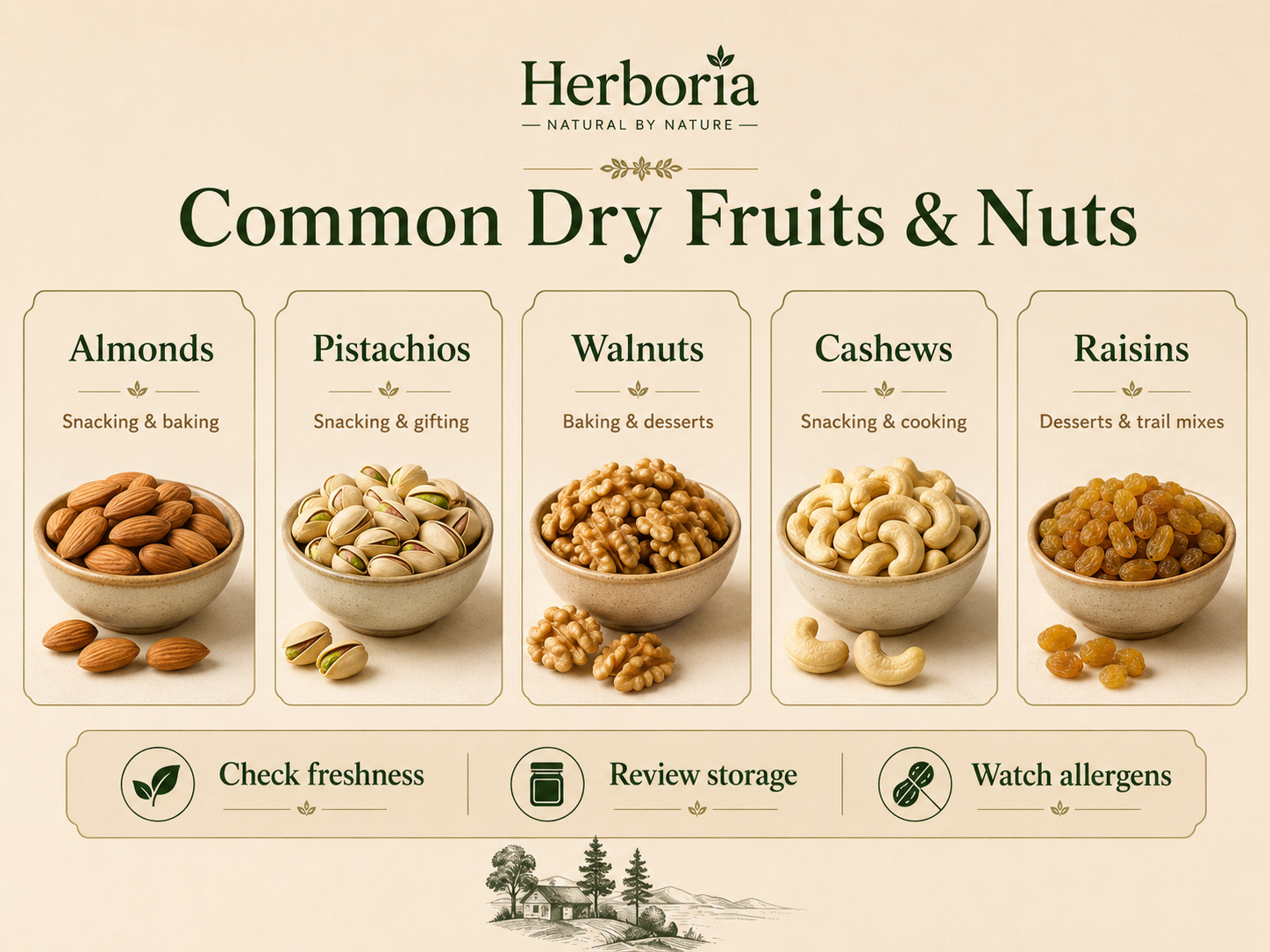
Almonds, commonly called badam (بادام), are among the most familiar nuts in Pakistan. They are eaten plain, soaked by some households, chopped into desserts, used in kheer and halwa, and added to breakfast or snack mixes.
Herboria currently lists both Premium American Almonds Without Shell and American Almonds Without Shell Export Quality. When comparing almond products, look at kernel size, breakage, appearance, freshness, pack size and whether the product is raw, roasted or otherwise processed.
Pistachios — Pista
Pistachios, or pista (پستہ), are commonly eaten as a snack and used in desserts, mithai, kulfi and gift assortments. They may be sold in-shell or shelled, salted or unsalted. Herboria’s Premium Pistachios listing can be reviewed for current pack details and product form.
Walnuts — Akhrot
Walnuts, known as akhrot (اخروٹ), are sold whole in shell or as kernels. Kernel colour and natural shape can vary. Buyers should focus on freshness, absence of rancid odour, low breakage where premium appearance matters and secure packaging.
Raisins — Kishmish
Raisins or kishmish (کشمش) are dried grapes used in pulao, desserts, bakery items, breakfast and snack mixes. Colour varies by grape type and drying method. A darker or lighter raisin is not automatically better; the product specification and freshness are more useful indicators.
Dates — Khajoor
Dates or khajoor (کھجور) are especially popular during Ramadan but are consumed throughout the year. Varieties can differ greatly in size, softness, sweetness and moisture, so buyers should compare variety and storage instructions rather than relying only on price.
What Are the Practical Benefits of Dry Fruits?
Many nuts and dried fruits provide useful nutrients, but the exact profile varies by food. Nuts commonly provide fats, protein, fibre and micronutrients, while dried fruits can provide carbohydrate, fibre and minerals in a concentrated form because much of the water has been removed.
The sensible way to discuss dry fruits benefits in Pakistan is to consider them as nutrient-dense foods that can fit into a balanced diet—not as medicines. A handful of nuts or dried fruit can be convenient, but portion size, added salt, added sugar, allergies and total calorie intake still matter.
Common Uses in Pakistani Food
- snacking at home, work or while travelling;
- garnishing kheer, firni, halwa and other desserts;
- adding almonds, pistachios or raisins to breakfast;
- using raisins and nuts in pulao or rice dishes;
- preparing mixed dry-fruit gift boxes;
- serving guests during winter and festive periods;
- using dates and nuts during Ramadan.
The best type depends on the recipe. Salted pistachios may be excellent for snacking but unsuitable for a dessert where an unsalted nut is preferred.
How to Check Dry Fruit Quality Before Buying
Appearance
Look for kernels or dried fruits that match the expected variety. Some natural variation in size and colour is normal. Excessive dust, webbing, insects, mould or unusual staining are warning signs.
Aroma
Nuts contain oils that can develop a stale or rancid smell if stored poorly for long periods. A clean, characteristic nutty aroma is preferable to a sharp, paint-like or stale odour.
Texture
Almonds and pistachios are normally expected to have a firm or crisp texture when fresh. Dried fruits such as dates and raisins naturally have softer textures. Compare like with like rather than using one freshness rule for every product.
Packaging
Good packaging protects dry fruits from moisture, pests and repeated handling. A resealable pouch or tightly closed container is especially useful after opening.
Product description
Check whether the item is raw, roasted, salted, shelled, in-shell, pitted or unpitted. These details directly affect how the product should be used and compared.
Raw, Roasted, Salted or Unsalted?
There is no single best format for every buyer. Raw or unsalted nuts may be more flexible for cooking and baking. Roasted nuts can offer a different flavour and crunch. Salted nuts are convenient for snacking but may not suit people who need to limit sodium.
Always compare products based on the use you actually have in mind. A premium gift pack and a cooking ingredient can have different priorities.
How to Store Dry Fruits in Pakistan
- Keep the pack tightly closed after opening.
- Store in a cool, dry place away from direct sunlight and heat.
- Avoid exposure to kitchen steam and humidity.
- Use a clean, dry scoop or spoon.
- For longer storage, follow the specific product label; some products may benefit from refrigeration in warm conditions.
- Discard nuts or dried fruits that develop mould, pest activity or an obvious rancid odour.
Pakistan’s hot summers can accelerate quality loss, particularly in high-fat nuts. Buying pack sizes that match your household consumption can reduce the time an opened product sits in storage.
Allergy and Safety Considerations
Tree nuts are important food allergens. Someone with a diagnosed almond, pistachio, walnut or other nut allergy should avoid the relevant product and check cross-contact information where necessary.
Young children can also face choking risks from whole nuts. Age-appropriate preparation and professional advice are important where there is uncertainty. People with medically restricted diets should consider added salt, sugar and overall portion size based on their individual guidance.
How to Buy Dry Fruits Online in Pakistan
Online shopping makes it easier to compare pack sizes and varieties, but photographs alone cannot prove freshness. Look for a clear product name, origin or variety where relevant, pack weight, processing details, secure packaging and transparent contact and delivery information.
Herboria’s Dry Fruits & Nuts category provides a starting point for comparing current products. Individual listings such as Premium American Almonds, Export Quality Almonds and Premium Pistachios provide more specific product details.
Dry Fruits for Gifting
Dry-fruit gifting becomes especially popular in cooler months, weddings, corporate gifting, Ramadan and festive periods. For gifts, appearance, pack presentation and product mix matter alongside freshness. A recipient-friendly assortment should also consider allergies and whether products are salted or sweetened.
Related Dry Fruits & Nuts Guides
This article is the pillar page for Herboria’s Dry Fruits & Nuts topical cluster. Supporting articles HB-052, HB-053 and HB-054 will link back to this guide and answer narrower questions. Their direct URLs will be added after publication to avoid broken internal links.
Frequently Asked Questions
What are the benefits of dry fruits in Pakistan?
Dry fruits and nuts can provide concentrated energy and useful nutrients such as fibre, fats, protein and micronutrients depending on the individual food. They should be treated as foods within a balanced diet, not as cures.
How are dry fruits commonly used?
They are eaten as snacks and used in desserts, breakfast, pulao, baking, gift boxes and Ramadan meals.
How should dry fruits be stored?
Keep them sealed, cool and dry, away from sunlight, heat and humidity. Follow product-specific storage directions, especially during hot weather.
What precautions apply?
Check for tree-nut allergies, choking risk for young children, added salt or sugar and any individual dietary restrictions.
Where can I explore Dry Fruits & Nuts in Pakistan?
Browse Herboria Dry Fruits & Nuts for current products, pack sizes and pricing.
Editorial Note
This guide provides general food and buying information. It does not claim that dry fruits or nuts diagnose, treat, cure or prevent disease.