Blog
Natural Oils in Pakistan: Edible, Hair and Skin Oil Guide

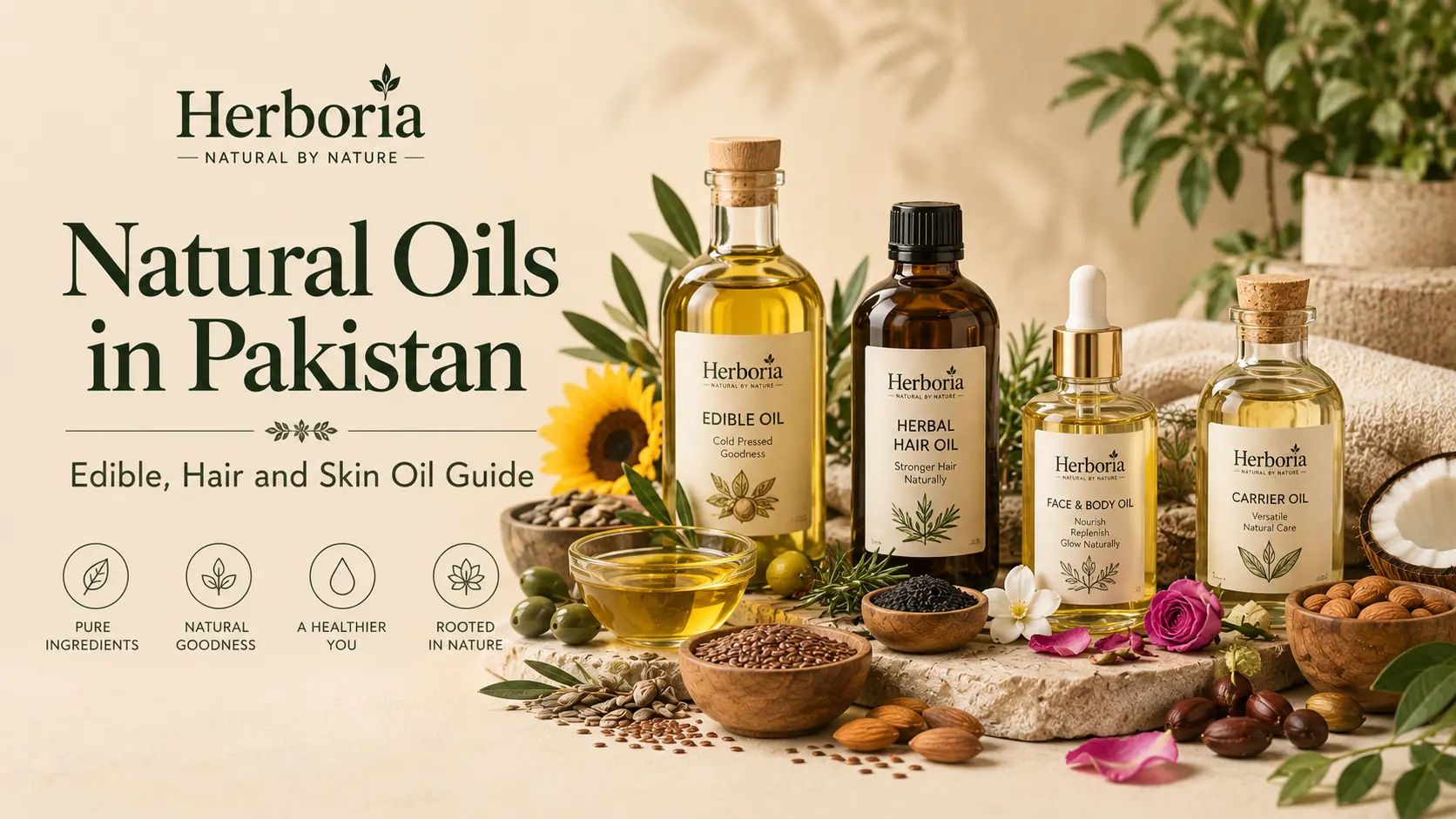
Natural oils in Pakistan can include edible cooking oils, hair oils, face and body oils, infused oils and other plant-based oil products. The key is to buy and use each oil according to its declared purpose, ingredients and label directions. An oil sold for food is not automatically the same thing as one sold for cosmetic or external use.
This guide explains the main oil categories, how to read labels, what “cold-pressed” or “infused” means, how to store oils in Pakistan’s climate and how to avoid unsupported skin, hair or medical claims.
What Counts as a Natural Oil?
“Natural oil” is a broad shopping term rather than one single product type. It may describe an oil pressed from seeds or fruits, an oil infused with herbs, a carrier oil used on skin, a blended hair oil, or a food-grade cooking oil.
Because the category is broad, the most important first question is simple: What is this oil intended for? Check the product page and packaging before deciding how to use it.
Main Types of Natural Oils in Pakistan
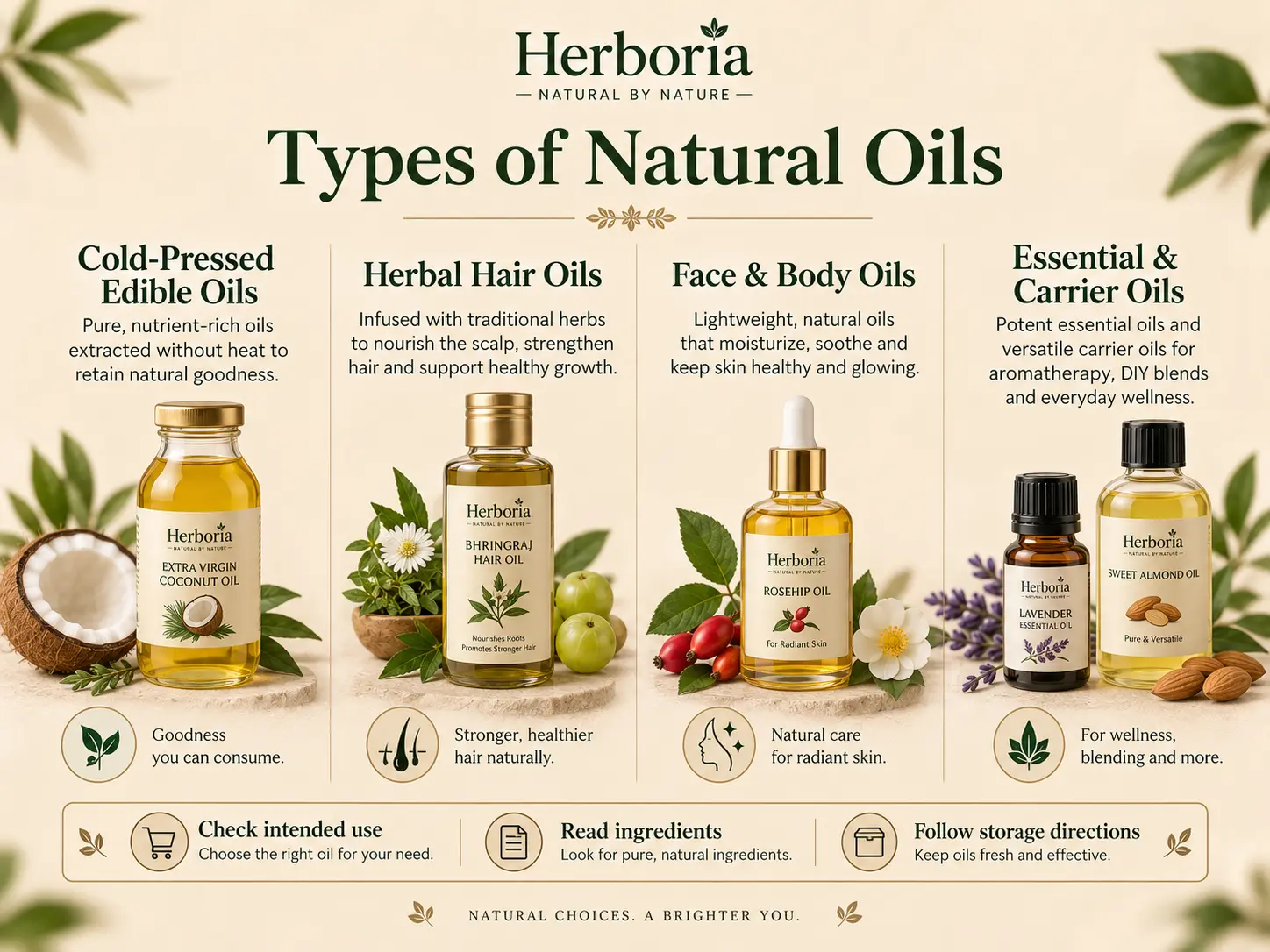
Cold-Pressed Edible Oils
Cold-pressed oils are produced using mechanical pressing with limited external heat. The phrase describes a processing method; it does not automatically prove that an oil is better for every purpose. For edible use, the product should be clearly sold as a food and should provide appropriate ingredient and storage information.
Herbal Hair Oils
Hair oils may be single oils or blends infused with herbs or fragrances. Their role is generally cosmetic and grooming-focused. A good listing should disclose the oil base and any added ingredients rather than relying on a vague “herbal” description.
Face and Body Oils
Oils used on skin should be clearly intended for external cosmetic use. People with sensitive skin should be cautious with fragranced or essential-oil-heavy blends. A small patch test can help identify obvious irritation before wider use, but it does not guarantee that a product will suit every person.
Infused Herbal Oils
Infused oils are made by steeping herbs or botanicals in a carrier oil. Their composition depends on both the base oil and the infused material, so a clear ingredient list matters.
Essential and Carrier Oils
Carrier oils are typically used as a base for topical products, while essential oils are concentrated aromatic extracts. They are not interchangeable. Concentrated essential oils should not be treated like ordinary cooking oil or casually applied undiluted simply because they come from plants.
Natural Oils for Skin in Pakistan: What Should Buyers Look For?
The focus keyword “natural oils for skin Pakistan” can lead to exaggerated claims online. A more useful way to shop is to look at the ingredient list, intended use, packaging and whether the seller distinguishes cosmetic care from medical treatment.
For cosmetic products, ingredient transparency matters. International cosmetic-labelling guidance also emphasises clear ingredient naming rather than vague marketing language. Herboria’s editorial standard is to avoid presenting a cosmetic oil as a treatment for disease or a guaranteed way to change the structure or function of skin.
Edible Oil vs Hair Oil vs Skin Oil
| Oil type | Primary purpose | What to verify |
|---|---|---|
| Edible oil | Cooking or food use | Food-grade positioning, ingredient, storage and best-before information |
| Hair oil | Hair/scalp grooming | Base oil, added herbs/fragrance and external-use directions |
| Face/body oil | Cosmetic skin care | Ingredient list, external-use guidance and sensitivity considerations |
| Essential oil | Concentrated aromatic use | Concentration, safe-use directions and whether dilution is required |
How to Read an Oil Label Before Buying
Check the exact oil name
A front label that says only “herbal oil” tells you very little. Prefer products that identify the base oil and important added ingredients.
Check whether it is edible or cosmetic
Do not infer food suitability from the fact that the ingredient is plant-derived. The intended use should be explicit.
Check added fragrance or botanical extracts
If the product is a blend, the listing should not present it as a single pure oil. Added fragrance, herbs or extracts can change how the product behaves and who may tolerate it.
Check the packaging
Oils can be affected by air, light and heat. Dark or opaque packaging may be useful for some oils, but the best storage choice depends on the specific oil. Always follow the label.
Check claims, not just aesthetics
Words such as “natural,” “pure” or “traditional” are not proof of clinical benefit. Claims about curing acne, reversing hair loss, treating eczema or healing disease should be treated separately from ordinary cosmetic or food use.
Storage in Pakistan’s Climate
Pakistan’s heat can accelerate quality changes in some oils. Keep products tightly closed and follow their stated storage directions. Avoid leaving oils near stoves, sunny windows or in cars. If a label recommends refrigeration after opening, follow that direction rather than a generic internet rule.
Changes in colour, cloudiness or viscosity can have different meanings depending on the oil and temperature. An unusual rancid odour, damaged seal or contamination is more useful as a warning sign than a social-media “purity test.”
Using Natural Oils Responsibly
For food oils, use them as foods and consider the overall dietary pattern rather than looking for a miracle ingredient. For cosmetic oils, keep expectations realistic: they may support a grooming or moisturising routine, but that is different from treating a medical condition.
If you have a diagnosed skin condition, severe irritation, a known allergy, are pregnant or breastfeeding, or are taking medicines that could be relevant to an internally consumed herbal oil, seek appropriate professional advice.
Where to Explore Natural Oils at Herboria
Start with the Herboria Natural Oils category. Herboria’s category structure also includes Cold-Pressed Edible Oils, Herbal Hair Oils, Face & Body Oils, Essential & Carrier Oils and Infused Herbal Oils. Some subcategories may be expanded over time, so the main category is the best place to check current live availability.
If you are specifically researching traditional cooking fats, Herboria’s Desi Ghee in Pakistan guide explains cow and buffalo ghee separately from plant oils. For broader ecommerce checks, see the quality and trust guide for buying natural products online in Pakistan.
Quick Buying Checklist
- Is the exact oil or oil blend named?
- Is the intended use clearly edible, cosmetic or aromatic?
- Are added ingredients disclosed?
- Are storage instructions provided?
- Does the seller avoid turning cosmetic claims into disease-treatment claims?
- Is the packaging appropriate and securely sealed?
- Can you distinguish traditional use from evidence-backed information?
Related Natural Oils Guides
This is the pillar article for Herboria’s Natural Oils cluster. Supporting articles HB-106 through HB-115 will cover cold-pressed oils, hair oils, carrier/essential oils, storage, buying checks and evidence-sensitive use questions. Those support articles should link back to this guide when published, and this section should then be updated with direct sibling links.
Frequently Asked Questions
What are natural oils for skin in Pakistan?
They are plant-derived or plant-based oil products sold for cosmetic skin use. The category can include single carrier oils, blends and infused oils. Check the exact ingredient list and external-use directions rather than relying only on “natural” marketing.
How are natural oils commonly used?
Uses depend on the product. Some oils are foods, some are used for hair grooming, and others are intended for face or body care. Always follow the intended-use label.
How should natural oils be stored?
Follow the product label. In general, keep oil containers tightly closed and away from unnecessary heat, direct sunlight and contamination.
What precautions apply?
Do not assume every plant oil is edible or suitable for direct skin application. People with allergies or sensitive skin should be cautious, and medical concerns should be discussed with a qualified professional.
Where can I explore Natural Oils in Pakistan?
Browse Herboria’s Natural Oils category to see the currently available products and relevant subcategories.
Sources and Editorial Notes
- FDA: Cosmetic Ingredient Names — reference for ingredient transparency and naming.
- FDA: Cosmetics Labeling Claims — reference for separating cosmetic claims from disease-treatment claims.
Herboria editorial note: This article is educational and buying-focused. It does not diagnose, treat or prescribe. Traditional use and cosmetic use should not be presented as proof of medical effectiveness.