Blog
Pakistani Achar: Types, Ingredients and Buying Guide

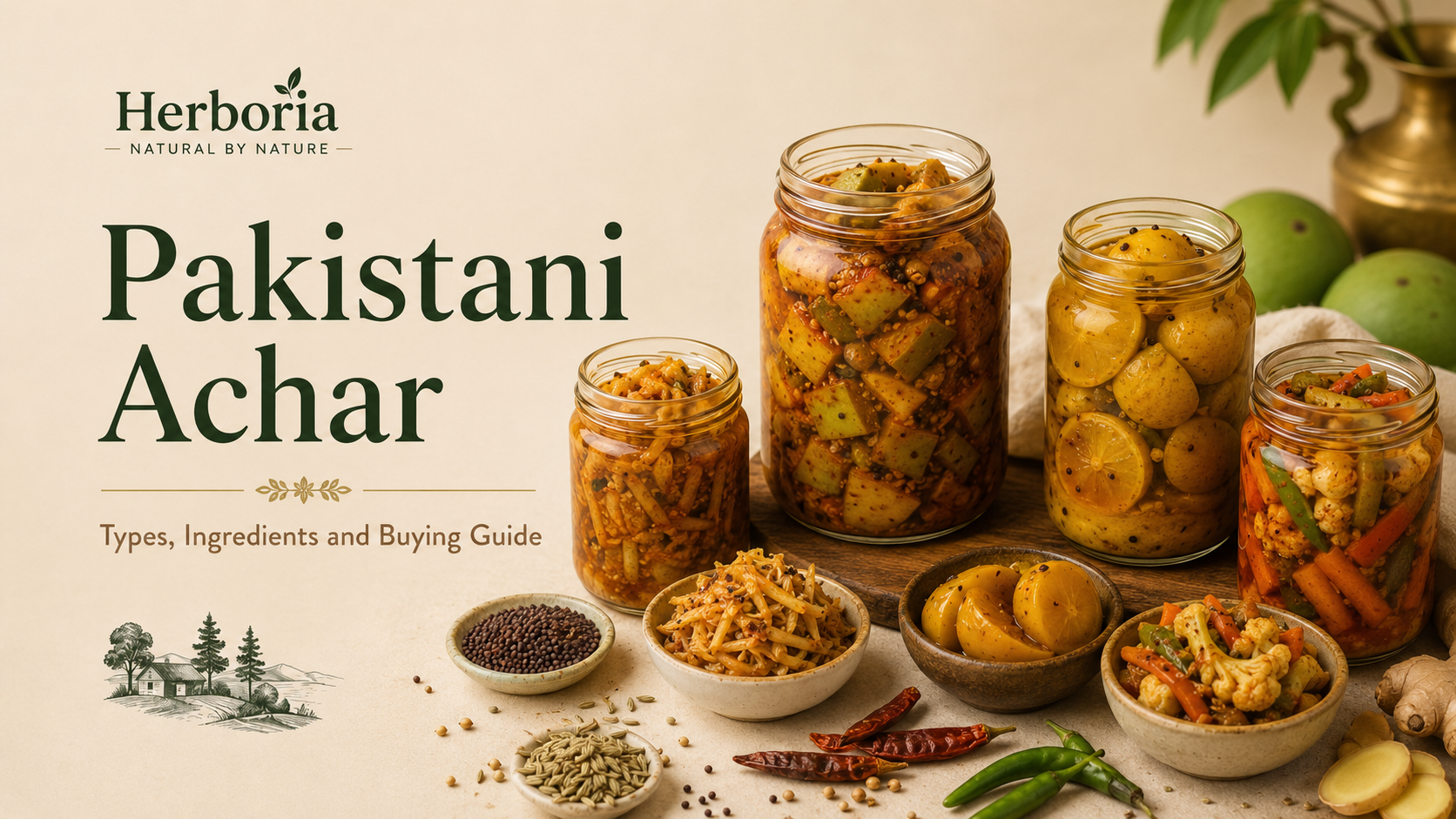
Pakistani achar is a broad family of preserved fruits and vegetables prepared with salt, spices, oil, acidity or a combination of these ingredients. In Pakistan, achar is commonly served with paratha, daal, rice, sabzi and other everyday meals. When buying authentic achar online in Pakistan, the most useful checks are the actual ingredients, type of oil or brine, spice level, packaging, storage instructions and the condition of the seal.
Achar varies greatly by household, region and recipe. Mango, lemon, ginger, garlic, chilli, mixed vegetable and dela pickles can all taste very different even when they are sold under the same general “achar” category. This guide explains the main types, what usually goes into them, how to compare products and how to store them responsibly after opening.
Explore: Herboria Achar & Pickles | Ginger Pickle (Adrak Ka Achar) | Dela Pickle (Dela Achar)
What Is Pakistani Achar?
Achar is the South Asian word commonly used for pickles and preserved savoury foods. In Urdu, pickle is usually written as اچار. Traditional Pakistani achar recipes often combine a fruit or vegetable with salt, spices and a preserving medium such as oil, vinegar, lemon juice or naturally released moisture. The exact formula differs from one recipe to another, so a label matters more than a generic description.
Achar is normally eaten as a condiment rather than as a complete meal. Its role is to add acidity, salt, spice and aroma alongside relatively simple foods such as daal, roti or rice.
Main Types of Achar in Pakistan
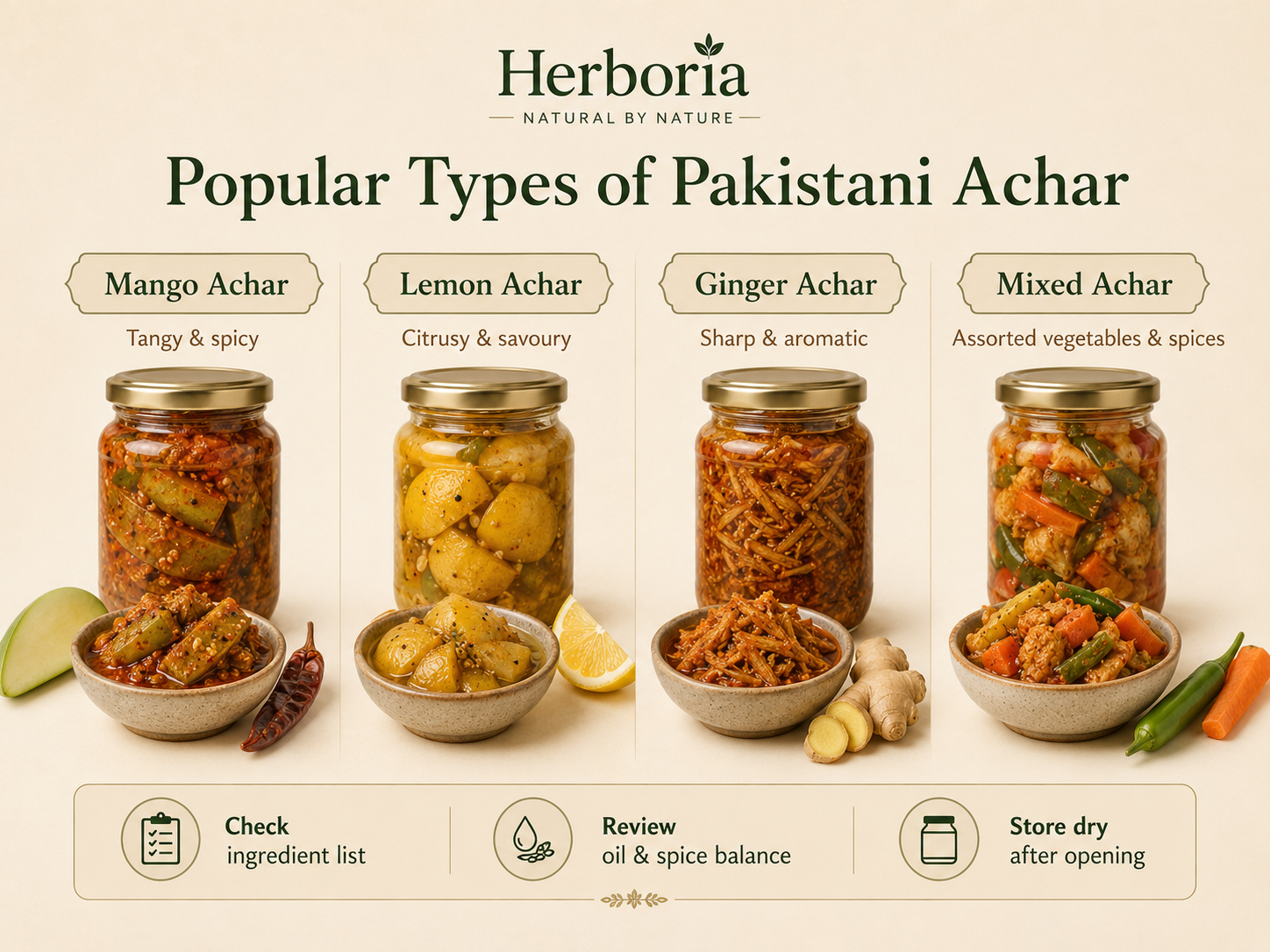
Mango Achar — Aam Ka Achar
Mango achar is one of the best-known Pakistani pickles. It is usually made from unripe mango pieces with salt, spices and a preserving medium. Recipes range from sharp and very spicy to mildly tangy, so buyers should check the ingredient list and spice description rather than assuming every mango pickle tastes the same.
Lemon Achar — Nimbu Ka Achar
Lemon achar uses whole or cut lemon and tends to have a strong sour profile. Depending on the recipe, it may include chilli, mustard, fenugreek, salt and oil. Some versions soften considerably during maturation, while others retain more texture.
Ginger Pickle — Adrak Ka Achar
Ginger pickle has a sharper, more aromatic character. Herboria’s Ginger Pickle is positioned around fresh ginger, mustard oil and Pakistani spices. Ginger achar works particularly well as a small side with daal, paratha, rice or savoury snacks.
Dela Achar
Dela is a traditional pickle ingredient that is less familiar to some younger online shoppers. Herboria’s Dela Pickle listing describes a mustard-oil based, tangy and moderately spicy product. Because dela is a distinctive ingredient, checking the actual product description is more useful than comparing it with a generic mixed pickle.
Mixed Achar
Mixed achar combines more than one fruit or vegetable. Common combinations can include mango, carrot, chilli, lemon, garlic or other seasonal ingredients. The composition varies significantly between manufacturers, so buyers should not assume that two “mixed achar” jars contain the same ingredients.
Garlic, Chilli and Specialty Pickles
Garlic and chilli pickles are usually selected by shoppers who want a stronger, more focused flavour. Specialty pickles may use regional fruits, vegetables or recipes and are best evaluated by ingredient list, serving preference and spice level.
Common Ingredients in Pakistani Achar
There is no single universal achar recipe. Depending on the product, you may see ingredients such as:
- mango, lemon, ginger, garlic, chilli, dela or mixed vegetables;
- salt;
- mustard oil or another declared edible oil;
- mustard seed;
- fenugreek or methi;
- fennel or saunf;
- red chilli, turmeric and other spices;
- vinegar, lemon juice or another acidic ingredient where used by the recipe.
The important point is that the exact ingredients should match the actual product label. A blog should not claim that every Pakistani achar contains the same spice mixture.
How Is Achar Commonly Used?
Achar is usually eaten in small amounts alongside other foods. Popular pairings in Pakistan include paratha, roti, daal, chana, rice, pulao, sabzi and simple lunchbox meals. It can also be served with savoury snacks where a tangy and spicy condiment is wanted.
Because achar recipes can be salty, oily and spicy, the amount used should reflect personal taste and dietary needs. It is a condiment, not a treatment or medicinal food.
How to Choose Good Achar Online in Pakistan
1. Read the ingredient list
A clear ingredient declaration tells you far more than words such as “desi” or “traditional.” Check the main fruit or vegetable, oil or acidic medium, salt, spices and any allergens that are relevant to you.
2. Check the pickle type and spice level
Someone looking for a sharp ginger pickle may not enjoy a sweeter or milder mixed achar. A useful listing should explain the dominant ingredient and general taste profile.
3. Look for secure packaging
The jar or container should arrive sealed and protected from leakage. Oil-based pickles in particular need packaging that can remain tightly closed after opening.
4. Review storage directions
Storage requirements can differ by recipe and packaging. Follow the directions printed on the specific jar. Do not assume that every homemade-style pickle can be kept indefinitely at room temperature.
5. Check the seller’s delivery and payment information
For online buying, transparent delivery, payment and contact information improves trust. Herboria’s standard shelf-stable products are offered for delivery across Pakistan with Cash on Delivery and advance-payment options.
Quality Checks That Matter More Than “Home Purity Tests”
For achar, the practical quality checks are simple: intact packaging, a clean seal, ingredient transparency, normal aroma for the recipe, no visible mould, and storage within the stated best-before period. A change in oil appearance or spice settling may be normal in some products, while swelling, leakage, mould or an obviously abnormal odour should be treated seriously.
Viral kitchen tests are not a reliable substitute for proper food handling or verified product information. If a product looks contaminated or the seal is compromised, it is safer not to consume it.
How to Store Achar After Opening
- Follow the label. The product’s own storage instructions take priority over generic advice.
- Use a clean, dry spoon. Introducing water or food particles can reduce product quality.
- Keep the lid tightly closed. This limits exposure to moisture and contamination.
- Protect the jar from excessive heat and sunlight. Store it according to the stated directions.
- Watch for spoilage signs. Discard the product if you notice mould, gas build-up, severe leakage or an abnormal smell.
Safety and Dietary Considerations
Achar can contain significant salt, oil and spice depending on the recipe. People who need to restrict sodium or certain ingredients should check the label and use an amount consistent with their dietary guidance. Mustard is also an allergen for some people, and some traditional pickle recipes use mustard oil or mustard seed.
Pregnant people, children, people with food allergies or anyone following a medically restricted diet should rely on appropriate professional advice where needed rather than assuming a traditional food is automatically suitable for everyone.
Buying Authentic Achar Online in Pakistan
The phrase authentic achar online Pakistan is best understood as a buying-intent search: shoppers want a product that tastes recognisably Pakistani and provides enough information to make a confident purchase. Authenticity should therefore come from the recipe, declared ingredients, taste profile and transparent seller information—not from unsupported claims.
You can browse the Herboria Achar & Pickles collection to compare available pickle types. For more focused options, review the individual listings for Adrak Ka Achar and Dela Achar.
Related Achar Guides
This is the pillar article for Herboria’s Achar & Pickles topical cluster. Planned supporting articles HB-074, HB-075 and HB-076 will cover narrower pickle questions. Direct links will be added here when those articles are published so the cluster does not create broken internal links before publication.
Frequently Asked Questions
What is authentic Pakistani achar?
Pakistani achar is a savoury preserved fruit or vegetable condiment prepared with ingredients such as salt, spices, oil or acidity. “Authentic” should refer to a clearly described recipe and ingredients rather than an unverified purity claim.
How is achar commonly used?
It is commonly served in small amounts with paratha, roti, daal, rice, sabzi and other Pakistani meals to add tangy, salty and spicy flavour.
How should achar be stored?
Follow the jar’s own instructions, keep the lid tightly closed and use a clean, dry spoon. Do not introduce water or used utensils into the container.
What precautions apply?
Check salt, spice and allergen information, especially if the recipe contains mustard. Discard a product with mould, a damaged seal, severe leakage or an abnormal odour.
Where can I explore Achar & Pickles in Pakistan?
Browse the Herboria Achar & Pickles category for current products, pack sizes and pricing.
Editorial Note
This article follows Herboria’s product information and topical-cluster plan. It is educational food content and does not present achar as a treatment or cure. Product ingredients and storage directions should always be checked against the latest product label.